Work

About

Projects

Creative

Contact

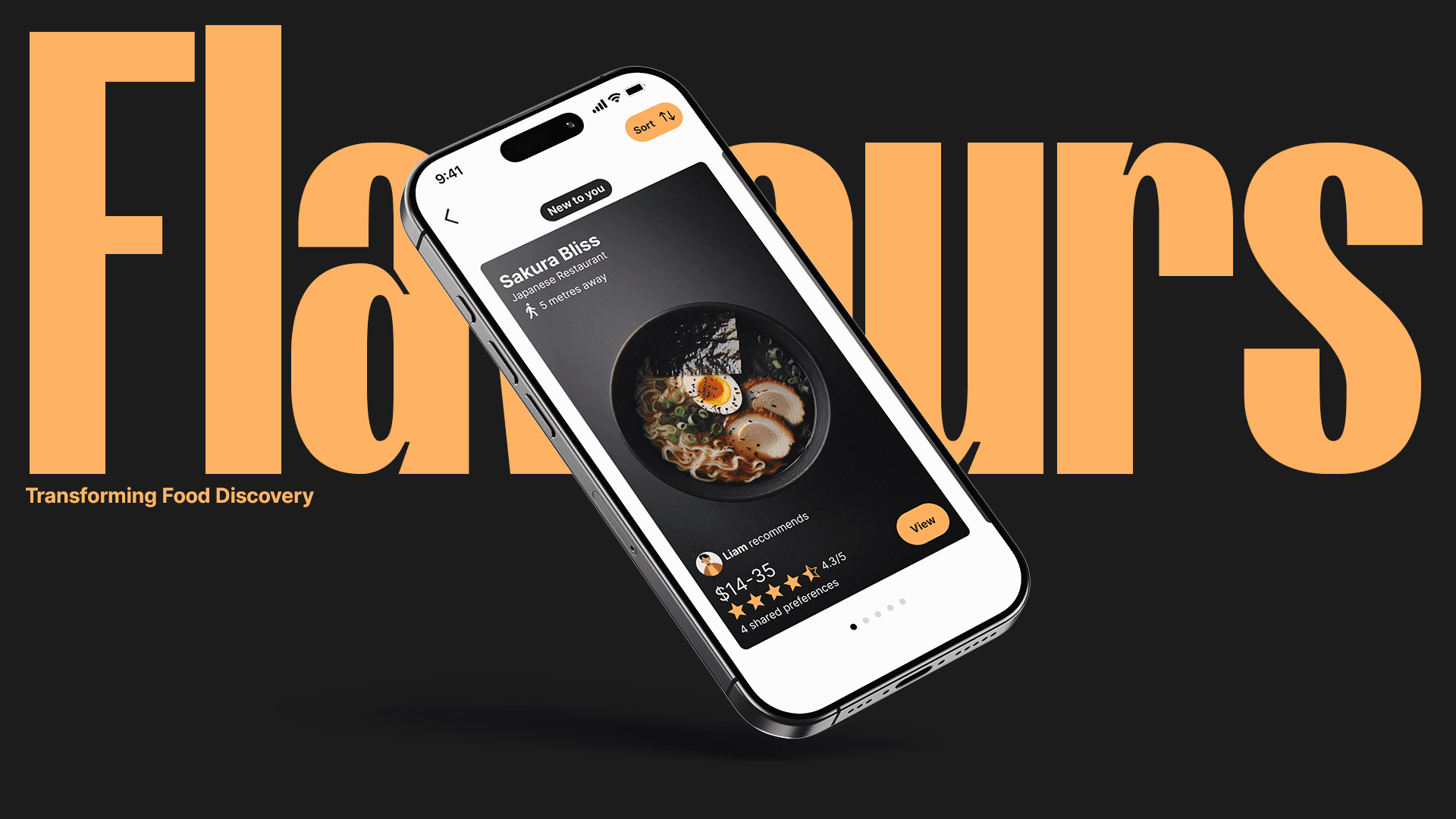
Transforming Food Discovery

Product Design, UX/UI Design

Date

May 2025 to Jun 2025

Project Type

Academic Studio Project

Skills

UX/UI Design

Product Design

User Research

Tools

Figma

Overview

Most people say they want to try new food places. Yet when it comes time to choose, they default to familiar options.

In exploring food discovery, I set out to understand why people hesitate to try unfamiliar places.

Initial research pointed to the convenience and fast-food loyalty. However, deeper investigation revealed a different issue: unfamiliar options feel risky due to lack of information and the effort required to evaluate them.

My research ultimately focused on insights of how trust and perceived effort shape food discovery, and how social recommendations can reduce hesitation.

Desk Research

Early research showed that fast food brands dominate consumer choice due to:

Familiarity & Trust

Consumer preferences have shifted towards familiar, well-established fast-food brands

(Montgomery et al., 2012)

Digital Marketing Visibility

Digital marketing strategies have made fast-food options more visible and accessible

(Casielles, 2007)

Convenience-driven Systems

Advanced technology solutions such as Buy Online, Pick Up in Store (BOPS) through restaurant-specific apps provide ease and reliability

(Liu et al., 2024).

However, there is limited research on how the convenience of fast-food affects the food discovery experience for consumers, particularly in relation to local or lesser-known establishments. This gap presented an opportunity to explore the problem through further research.

Primary Research

62.5%

do not actively seek out new places to eat

87.5%

felt apps and websites do not give enough options for lesser known places

100%

said they are interested in a product that enhances their food discovery experience

62.5%

said recommendations from friends and family would more likely lead them to try a new food place

From survey conducted with 8 participants

Key insights discovered through user interviews:

Preconceived Notions

Consumers are skeptical of unfamiliar food places due to preconceived notions and a fear of disappointment stemming from ambiguity and lack of prior knowledge.

“I didn't like the concept of the burritos and stuff… I wasn't too keen on having that type of food”

Preconceived Notion

“I'm not too familiar with it… I know Thai restaurants existed but I didn't know what Thai is..”

Preconceived Notion

“I don't have enough information of the place in terms of menu, pricing and meal size.. It looked like they are trying to be ambigous to not know what you are getting”

Lack of transparency

Mental Effort

The mental effort required to evaluate new food places leads consumers to default to convenient, familiar choices.

“I don't like to spend too much time and energy thinking about what food I get”

“I don't like change, I don't like trying because you don't know what you are getting and it can be risky”

“Having to look through menu to find something that you might like. That takes energy.”

Recommendations

Consumers are more likely to try a food place by recommendation. A recommendation can break the preconceived notion.

I didn't like the concept of the burritos and stuff… I wasn't too keen on having that type of food. My friends have suggested it to me. I might try it aswell and after trying it like, oh, this is good actually you know. I initially didn't think I'm going to enjoy it at all”

The research revealed that the challenge extends beyond fast-food loyalty — it lies in the disconnect between consumers and unfamiliar food places, driven by distrust, ambiguity, and perceived inconvenience.
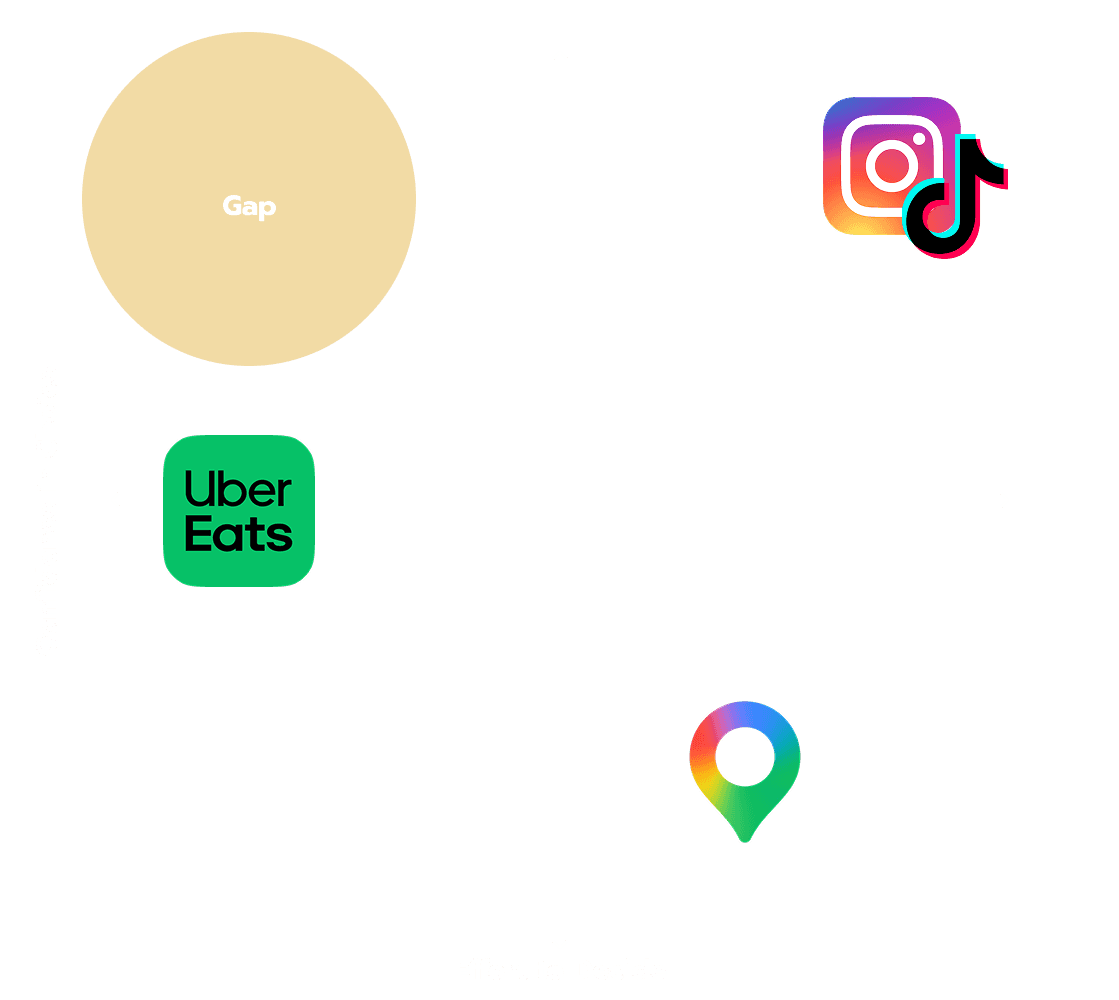
Competitor Analysis

Uber Eats

Fast and convenient decision-making

Easy reordering and comparison

Familiar and low-friction experience

Focused on delivery, not discovery

Reinforces habitual choices

Limited support for exploring new places

Google Maps

Comprehensive search and filtering

Rich information (reviews, photos, menus)

Easy access to nearby options

Overwhelming number of choices

High effort to evaluate options

Difficult to quickly assess trust

Social Media

High trust through social proof

Visually engaging and inspiring

Encourages exploration

Not structured for decision-making

High effort to convert to a choice

Lacks clear, actionable information

Opportunity

Bridge the gap between inspiration and decision-making by combining trusted social recommendations with a low-effort discovery experience.

Approach

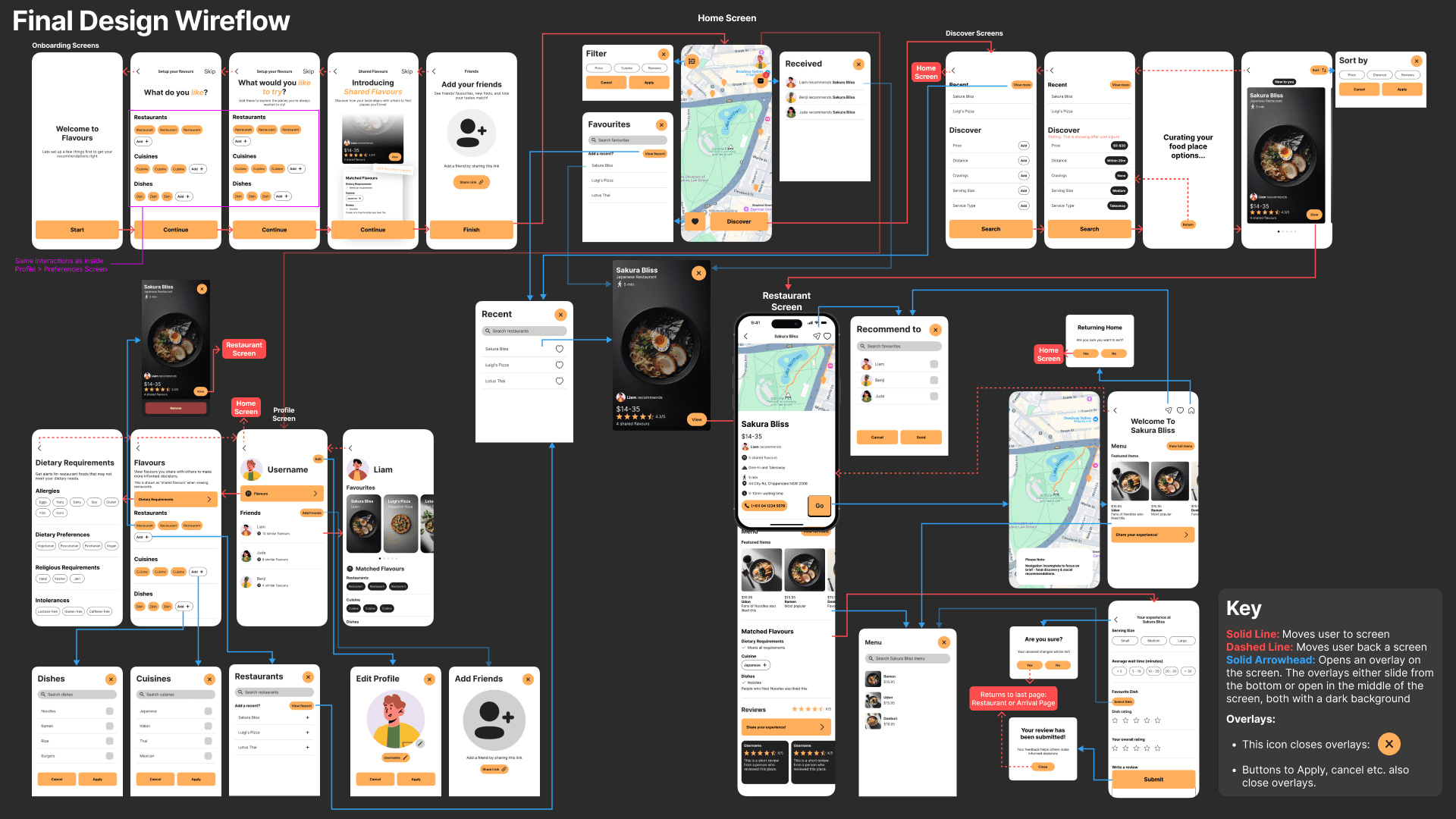
The approach to the problem space can be illustrated below to how insights from research will transition into the design through goals.

Insights

Consumers are skeptical of unfamiliar food places due to preconceived notions and a fear of disappointment stemming from ambiguity and lack of prior knowledge.

The mental effort required to evaluate new food places leads consumers to default to convenient, familiar choices.

Consumers are more likely to try a food place by recommendation. A recommendation can break the preconceived notion.

Empower users to confidently discover and try new food places.

Making information highly accessible, easy and efficient to retrieve.

Leverage recommendations (personal, social and reviews).

Design Goals

Problem Statement

Consumers often avoid unfamiliar food places due to preconceived notions, limited information, and fear of disappointment. The mental effort involved in evaluating new options leads them to default to convenient, well-known choices, reinforced by a lack of transparency around what's being offered. However, trusted recommendations and social influence were found to reduce hesitation and break negative assumptions. This increases confidence in decision-making when exploring new food experiences.

How Might We

How might we leverage social recommendations to build trust and reduce hesitation in trying new food places?

The Solution

Recommendations

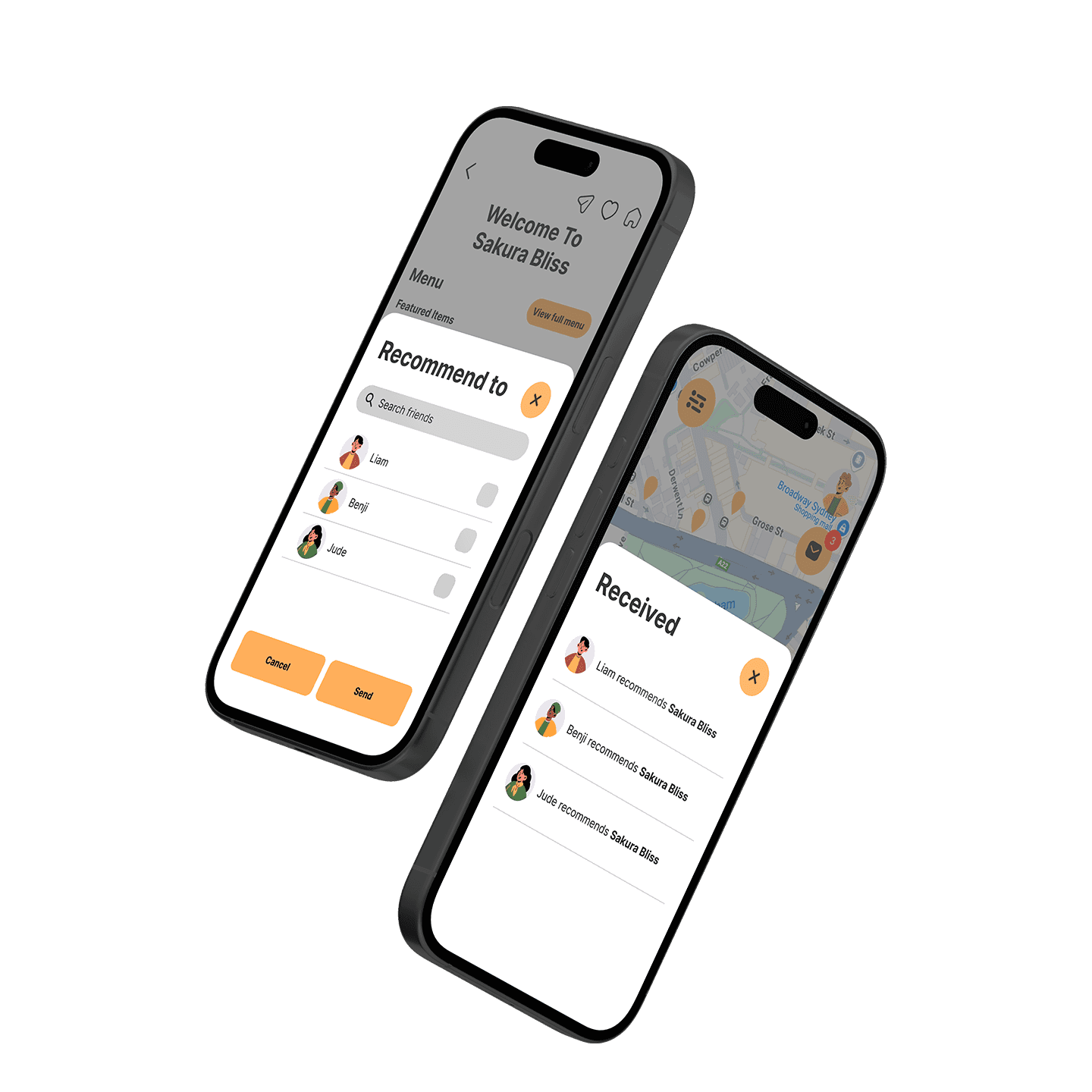
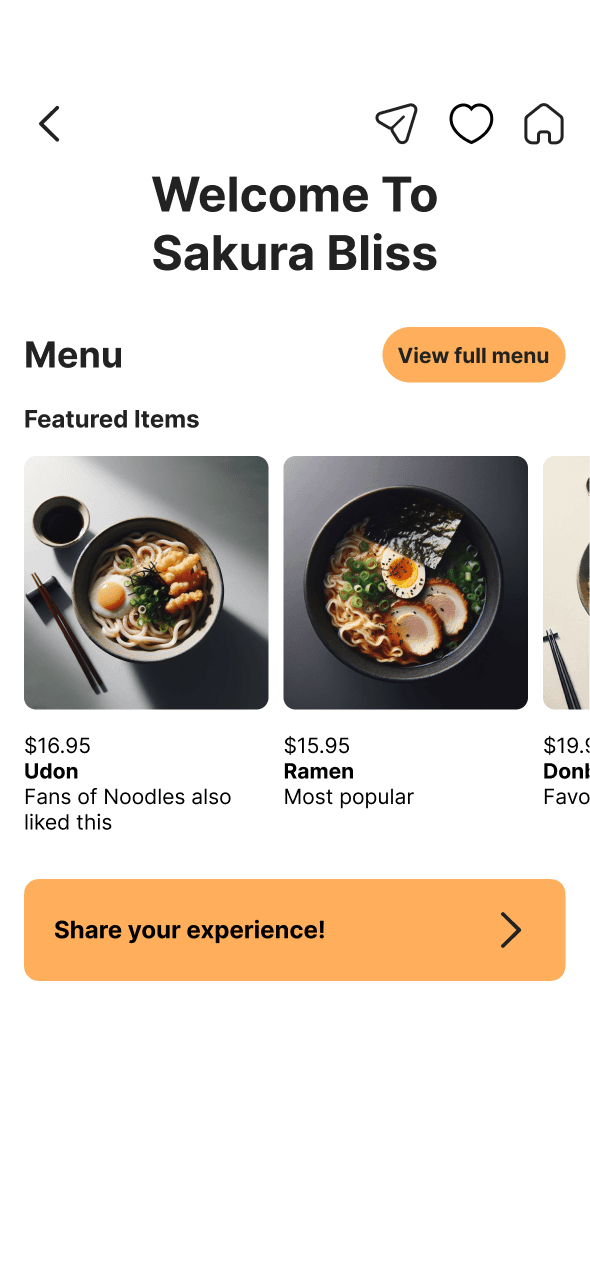
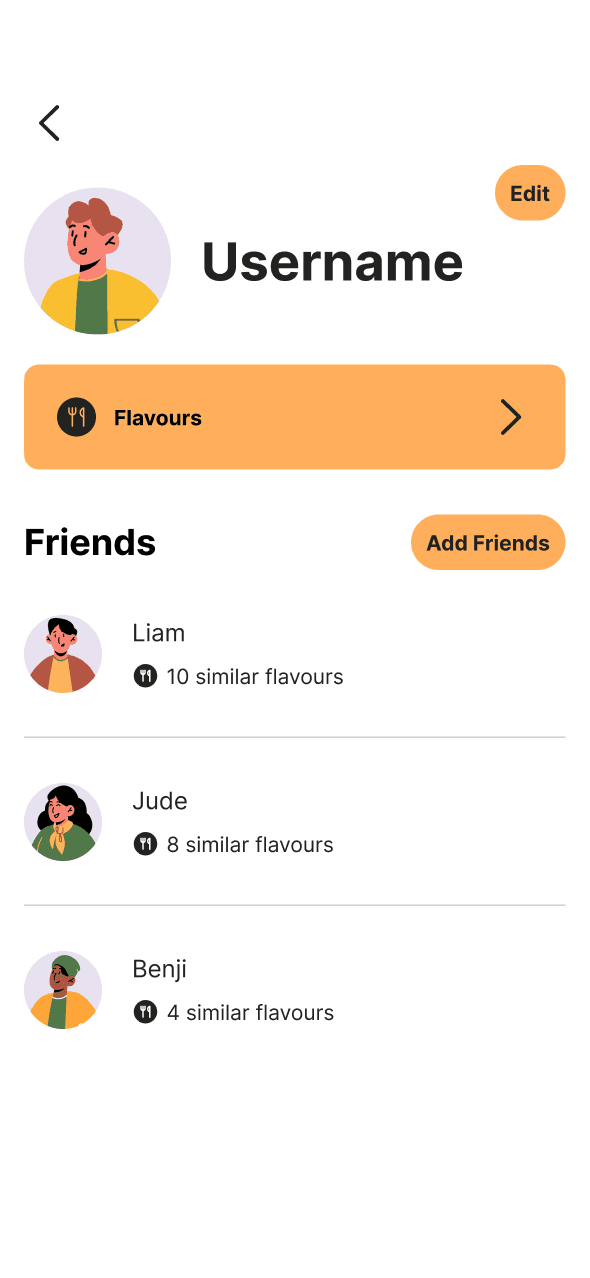
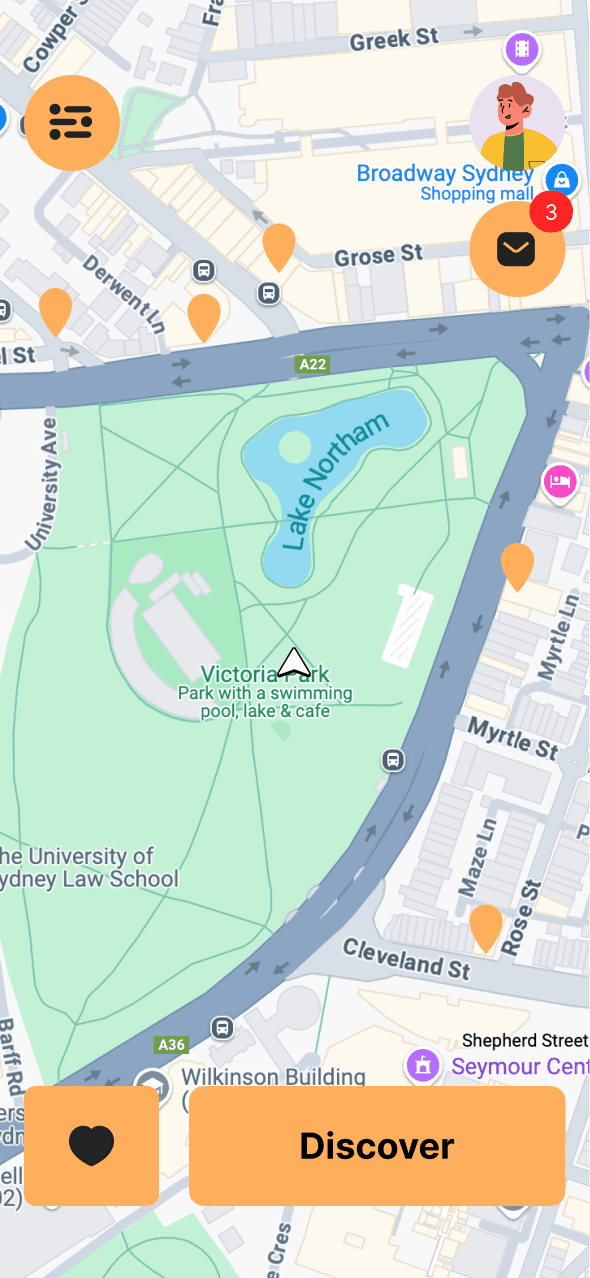
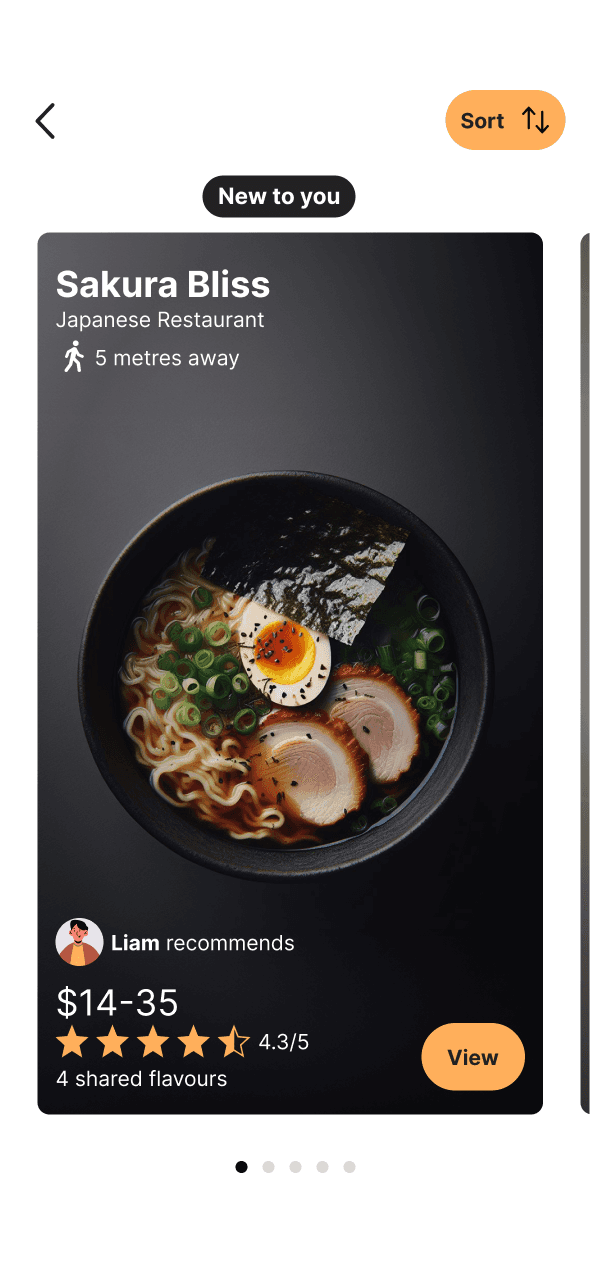
Send and receive recommendations of restaurants from your friends.

Personalised Discovery

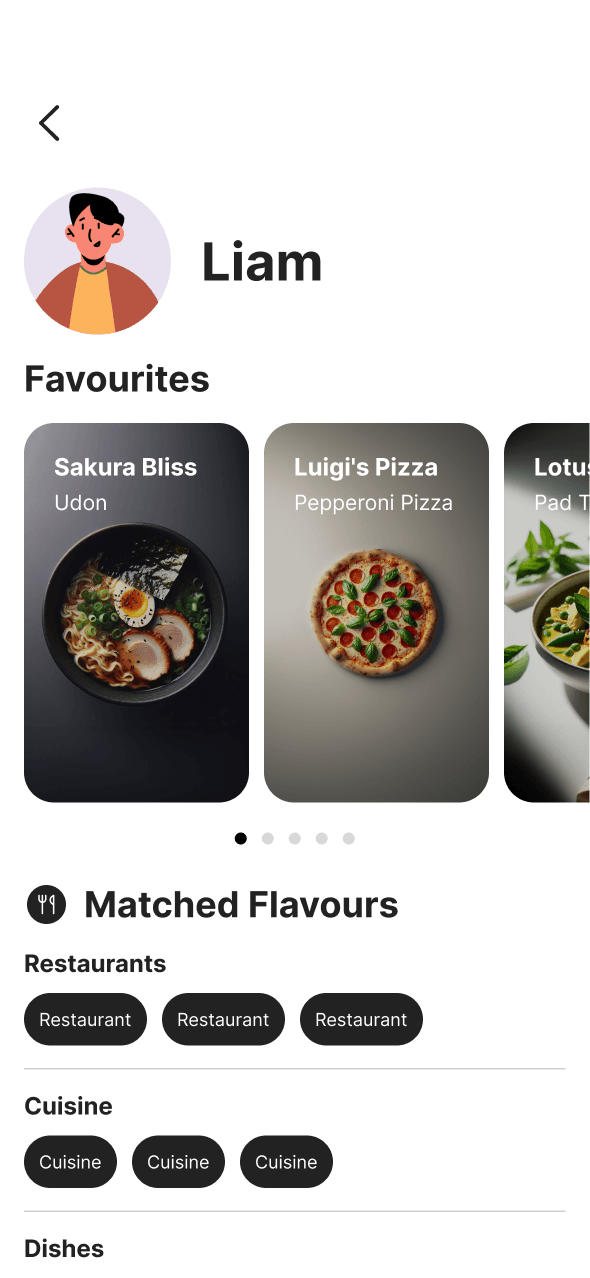
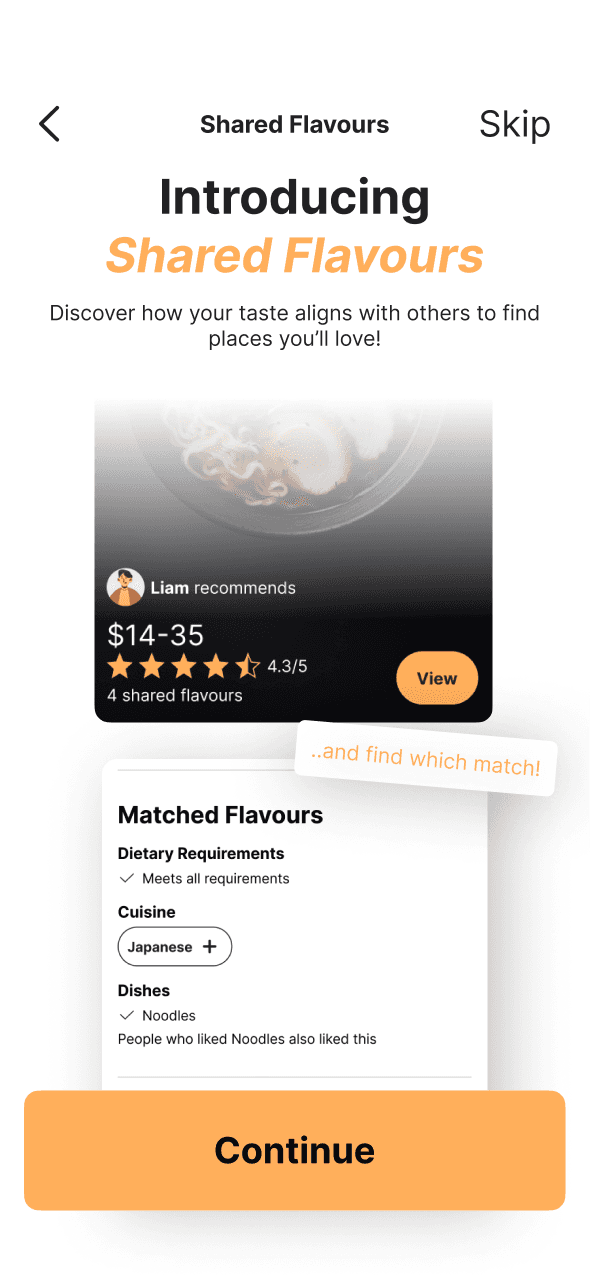
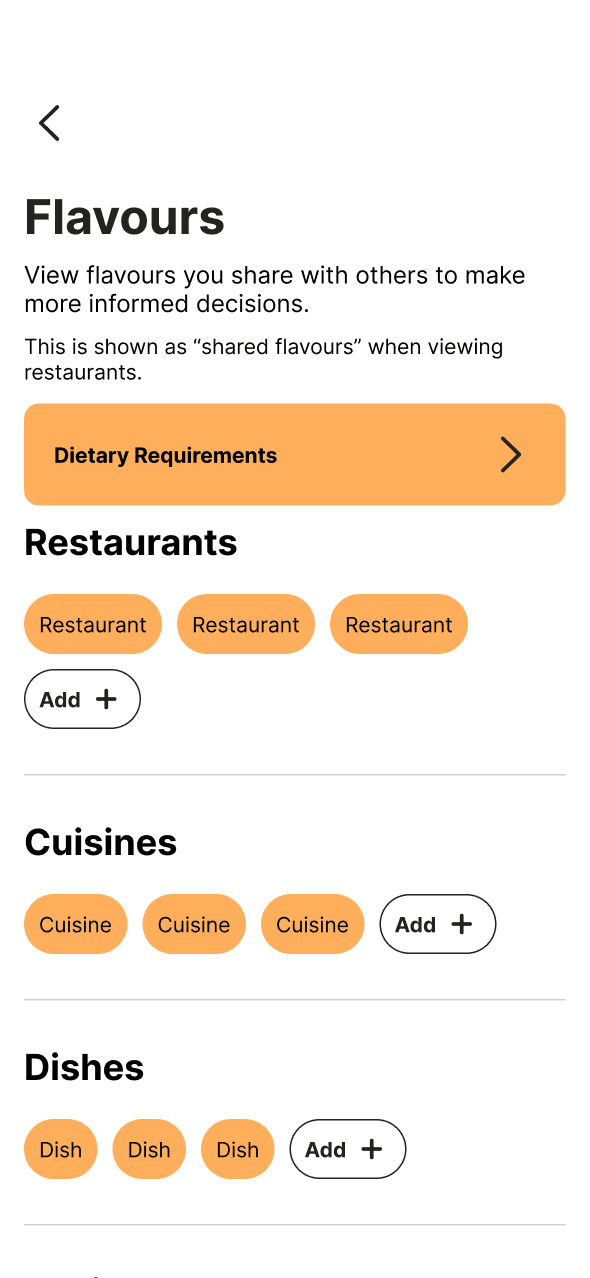
Discovering new places is more personalised and specific depending on your preferences (Flavours).

Interactive Prototype (Use full screen for the best experience!)

Consumers are more likely to try a food place by recommendation. A recommendation can break the preconceived notion.